Posts in Category: Car/Bike Repairing and Maintenance


When Should I Really Have My Brakes Inspected?
Most of us think like this about our brakes: as long as my car still stops, I am good to go. The issue is your brakes usually don’t warn you that you’re getting to the bad side of “worn” to “dangerously worn”. You won’t hear the grinding noise until it’s too late.
The general advice given is to check your brakes every six months, or with every other oil change. While this isn’t bad advice, it is pretty vague. Why? Because each driver has a unique way of operating their vehicle, and thus a unique amount of brake usage. A commuter that only drives the highway in nice weather, and rarely has to stop, uses the brakes very differently than a driver that navigates congested roads in a hilly area in rain.
What Does a Brake Inspection Entail?
A complete brake inspection is far more detailed than just looking at the wheel and saying you are good to go. A mechanic needs to check the thickness of your brake pads, look at your rotors, inspect your brake lines for leaks or damage, and check the brake fluid level. Many people don’t realize that brake fluid is a consumable item that absorbs moisture over time. As the moisture builds up in the brake system, it can cause a multitude of performance problems.
As mentioned earlier, the most important aspect of a brake inspection is checking the thickness of your brake pads. Brake pads generally begin life at 10-12 mm of friction material. Most brake shops recommend replacing your brake pads when they reach 3-4 mm of friction material. If you wait until your pads are totally worn, your metal back-up plates will grind against your rotors, turning a $200 brake pad replacement into a $600 job that includes new rotors.
Why Twice a Year? (and Why it May Not Work for Everyone)
While the twice-a-year brake inspection is a good idea, it was never intended to be a scientific study of brake wear rates. The real reason for twice a year is so that there are scheduled brake services that work well for most driving patterns. For most people, twice a year brake inspections will catch wear issues on the brake pads before they become major repairs.
However, there are certain driving conditions that will wear your brakes faster than others. City driving that involves a lot of stopping and starting will wear out your brake pads faster than highway miles. Driving a vehicle that is towing or hauling heavy loads will put more stress on your brakes than driving a light load. If you live in a hilly area and need to ride your brakes to slow down, you may need to inspect your brakes more frequently, every 3-4 months, rather than every 6 months.
Conversely, a driver who lives in a flat area and drives mostly on the highway may be able to go an entire year between brake inspections. The key is to know what type of driving you actually do, not what you think you do.
Early Warning Signs to Get Your Brakes Checked Now
If you find yourself between regular inspections, your brakes may alert you that they need attention. Squealing or squeaking sounds usually indicate that your brake wear indicators are contacting the brake pads. This is not an emergency situation, but it does indicate that you need to schedule an appointment with an auto brake service to replace your brake pads sooner rather than later.
Grinding is a different story altogether. Grinding is the sound of metal-on-metal contact, indicating that your brake pads have reached the point of total failure. Every mile you travel with grinding brakes will only increase the damage to your brake rotors. Rotors are costly to replace, especially if you have to machine or replace them due to the grinding. In this case, you should schedule a service appointment within a short period of time, not place it on your list to do later.
Brake vibration or pulsation in the brake pedal is indicative of warped brake rotors. Warped rotors occur when the rotors become overheated and develop uneven surfaces. Although the car will still stop, the pulsation will continue to worsen over time and could potentially affect your ability to stop quickly enough. Pulling to one side while braking is indicative of uneven brake pad wear or a stuck caliper. Both of these conditions can lead to more serious problems if left unchecked.
How Mileage Affects Brake Wear (More Than Just Time)
There are people who hardly ever drive their vehicles, and are wondering if they still need to follow a time-based inspection schedule despite only having accumulated a few thousand kilometers on their vehicles. The honest answer is yes, brake components do age, even when not in use. Seals can dry out, fluid can absorb moisture, and corrosion can develop on the brake rotors. However, the biggest determining factor for brake wear is mileage.
A general rule of thumb is that brake pads typically last anywhere from 40,000 to 70,000 kilometers under normal conditions. The range is quite large because brake wear is highly dependent upon your individual driving pattern and conditions. A person who anticipates stops and coasts to red lights to slow down, for example, will likely extend the lifespan of their brake pads towards the upper end of the range. Conversely, someone who brakes hard right at the last second every time will fall towards the lower end of the range.
By tracking the number of kilometers traveled since the last brake pad replacement, along with when the last brake service was performed, you will have a better understanding of when it is time to perform the next inspection, rather than simply relying on a calendar.
The Consequences of Delaying Brake Repairs
As previously stated, delaying brake repairs can result in significantly increased costs. A basic brake pad replacement can cost anywhere from $150-$300, depending upon the vehicle and whether it is the front or rear brake pads. Delaying a brake pad replacement until the pads are completely worn and the rotors are damaged will cost significantly more money, as now rotors need to be machined or replaced, adding another $100-$300 to the bill. Additionally, if a caliper freezes due to the uneven pressure and overheating of the brake pads, this will add additional hundreds of dollars to the overall cost of repairs.
Safety is also a consideration here, although it is something most people don’t think about until something goes wrong. Worn brake pads take longer to bring the vehicle to a stop. While this may not be a concern most of the time, when a pedestrian suddenly steps off the curb, or a child darts out into the road, those extra few feet of stopping distance can be the difference between a near miss and a collision.
What About Brake Fluid?
Everyone thinks about pads and rotors when it comes to brake maintenance, but brake fluid should receive some attention as well. Most manufacturers recommend changing the brake fluid every two to three years, regardless of mileage. Brake fluid absorbs moisture from the air over time. Moisture in the brake system lowers the boiling point of the brake fluid. If the brake fluid gets hot enough during aggressive braking, it can boil and form air pockets in the brake lines. These air pockets do not provide the necessary braking force. They merely allow the pedal to compress the air pocket instead of engaging the brake pads. Not a good situation.
Inspecting brake fluid during routine brake inspections can catch this problem before it develops into a full-blown emergency. Clear brake fluid is essentially the same color as water, with a slight amber tint. Any sign of discoloration or dirtiness indicates the fluid is due for a change.
Creating a Reasonable Maintenance Schedule
For most drivers performing typical suburban or city driving, having brakes inspected every six months or 10,000 km — whichever comes first — will catch potential problems before they grow into major repairs. Aggressive drivers, truckers, tow-truck operators, and anyone driving in hilly areas may want to have their brakes inspected every 3-4 months or after every 7,000 km. Drivers with a gentle foot and do a lot of highway driving can likely go a whole year between brake inspections.
Another important piece of the puzzle is listening to how the car behaves. Brakes that worked great yesterday shouldn’t need service today, unless something significant has changed. Small changes over the course of weeks or months can be difficult for the driver to detect, as the driver adapts to gradual performance decline without realizing it. That’s exactly where scheduled inspections prove their worth—a mechanic measuring pad thickness and checking rotor condition with objective measurements catches what has started to feel normal to someone behind the wheel every day.
Brakes aren’t something to worry about constantly, but they also deserve more attention than waiting until something sounds wrong. Regular inspections based on actual driving conditions keep the system reliable without turning brake maintenance into an expensive guessing game.
Your Car’s Most Hardworking Parts (And Why They Deserve Some Love)
Think about how many times you hop in your car without giving it a second thought. You turn the key, and everything just works. But behind that simple action, there are dozens of parts working together to get you where you need to go. Some of these components are absolute workhorses, doing their job day after day without complaint. Until they don’t.
The Engine: Your Car’s Heart That Never Gets to Rest
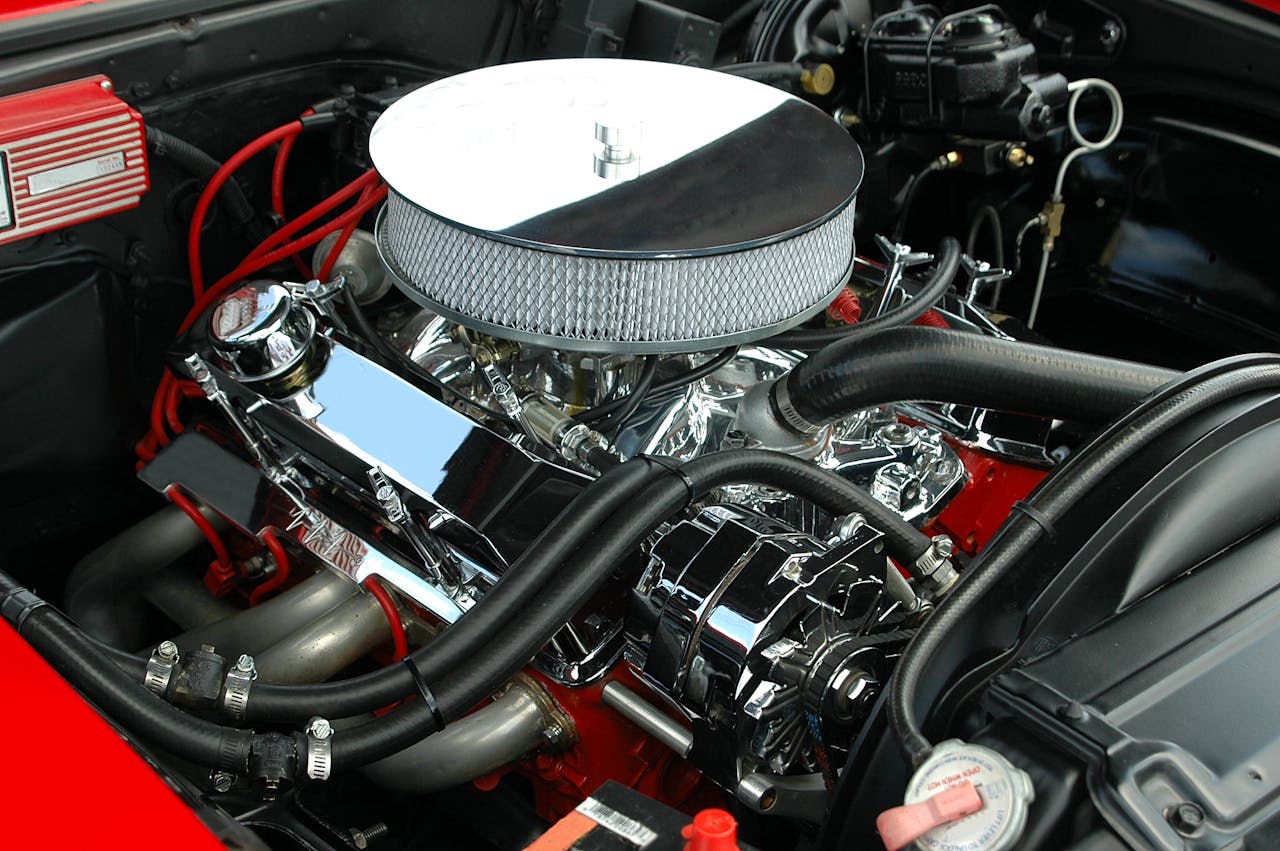
Your engine is probably the most obvious hardworking part, but do you really know what it goes through? Every time you start your car, thousands of tiny explosions happen inside those cylinders. The pistons are moving up and down hundreds of times per minute, the valves are opening and closing with perfect timing, and all those metal parts are rubbing against each other at incredible speeds.
What makes this even more amazing is that your engine does this while dealing with extreme temperatures. One second it’s ice cold on a winter morning, and within minutes it’s running at temperatures hot enough to boil water. The metal expands and contracts, the oil thickens and thins, and somehow everything keeps working together.
Your Brake System: The Silent Guardian
Here’s something that might surprise you – your brake pads are constantly working, even when you’re not braking. Every time you roll to a stop sign or ease up to a red light, those pads are gripping your rotors with incredible force. They’re dealing with all the kinetic energy of your moving car and turning it into heat.
The brake fluid is another unsung hero. This liquid has to handle extreme pressure and temperature changes without boiling or breaking down. When you’re looking for reliable replacement parts for your braking system, places that specialize in Car Spare Parts in Perth understand how critical quality is for safety components. Your brake system literally keeps you alive every day, yet most people never think about it until something goes wrong.
The Transmission: Your Car’s Muscle
Whether you drive stick or automatic, your transmission is doing some seriously heavy lifting. It’s taking all that power from your engine and figuring out how to deliver it to your wheels in the most efficient way possible. An automatic transmission has hundreds of internal parts, all working together to shift gears smoothly without you even noticing.
Think about what happens when you’re merging onto a highway. Your transmission has to instantly decide which gear will give you the power you need, make the switch seamlessly, and do it all while you’re focused on traffic. Then when you’re cruising, it shifts again to save fuel. It’s constantly making decisions and adjustments based on how you’re driving.
Your Suspension: The Comfort Crew
Your suspension system is probably the most underappreciated group of parts on your entire car. Every single bump, pothole, and uneven surface you drive over is absorbed by your shocks, struts, and springs. They’re working overtime to keep your tires in contact with the road while making sure you don’t feel every little imperfection in the pavement.
These components are dealing with your car’s full weight, plus whatever you’re carrying, plus the constant bouncing and movement that comes with driving. They’re what make the difference between a smooth ride and feeling every crack in the road. When they start wearing out, you’ll definitely notice the difference.
The Cooling System: Fighting the Heat
Your cooling system is in a constant battle against heat. Your engine produces enough thermal energy to heat a house, and your radiator, water pump, and cooling fans have to get rid of all that heat to prevent your engine from destroying itself.
The water pump is spinning constantly whenever your engine is running, circulating coolant through dozens of passages and hoses. The radiator is using airflow and its cooling fans to dissipate heat, and the thermostat is regulating the whole system to keep everything at the perfect temperature. One weak link in this chain, and your engine could overheat and cause thousands of dollars in damage.
The Electrical System: Your Car’s Nervous System
Modern cars have miles of wiring running through them, and your electrical system has to keep everything powered and communicating. Your alternator is constantly generating electricity while your engine runs, your battery stores power for when the engine is off, and countless sensors are monitoring everything from engine temperature to wheel speed.
Your car’s computer systems are processing thousands of data points every second, making adjustments to fuel mixture, ignition timing, and dozens of other parameters. All of this happens automatically, without you ever knowing about the constant electronic conversations happening throughout your vehicle.
Show Them Some Love
These hardworking parts deserve better than being ignored until they break. Regular maintenance isn’t just about following a schedule – it’s about recognizing that these components are doing incredible work every time you drive. Fresh oil, clean filters, and quality replacement parts when needed aren’t expenses, they’re investments in keeping these mechanical marvels running smoothly.
Your car is basically a collection of hardworking parts that have learned to cooperate perfectly. They’ve got your back every single day, handling extreme conditions and constant use without complaint. The least we can do is give them the attention and quality parts they need to keep doing their job. After all, they’re the reason you can get where you need to go, safely and reliably, day after day.

What Is The Difference Between Car Radio And Car Stereo?
Many people talk about the different sound systems you can get for your car, however, they use the expressions car radio and car stereo interchangeably. This leads to much confusion and can sometimes end up with someone buying the wrong thing or getting the wrong kind of car stereo installation.
So what is the difference? Can they be the same? Why is it important to know the difference?
Well certainly if you are thinking about buying one, you want to know what you are spending your hard-earned cash on. Therefore, we are going to walk you through what each one is and what they both include.
What Is A Car Stereo?
You may have heard someone use the words car stereo and then 2 minutes later they call it a sound system. This is because they are in fact, in modern times, often the same thing. The car stereo is the entire sound system that operates within your car.
However, there is some confusion due to the origin of the word. Stereo comes from stereophonic which refers to receiving sound from two channels. So originally a stereo system was the radio but over time the meaning has come to take on a new understanding.
So when you talk about getting a car stereo this usually includes the head unit as well as the speakers and amplifiers or any other audio additions. Overall, this is your entire sound system. Though it must be noted that it is always a good idea to double-check with the seller that this is what they mean.
What Is Car Radio?
Car radios essentially include only two main components. Tuners and receivers. However, some radios can also include a cd player, USB port, Bluetooth capabilities, and auxiliary cables. The portion that the word “radio” really focuses on however is its ability to receive and tune various AM/FM radio stations.
So if you are searching for a car radio it will be primarily with this function in mind despite some models including various other capabilities.
Why It Is Important To Know The Difference
You could be trying to purchase an entire sound system and then when you have already paid you then realize that all you have is a radio. Or alternatively, you could just be trying to purchase a tuner and receiver for radio stations and they quote you what an entire sound system would cost.
To avoid these confusions you need to understand what each of them means and that at times the seller may be referring to the same thing. Therefore, despite your newly acquired knowledge, it is always a good idea to make sure that you ask them specifics of what they include and what they themselves mean by these wordings.

Benefits of a High-Output Alternator
Your stock alternator may not be enough to do specific things for your vehicle. You might want to take an off-roading trip with friends or put in a booming sound system. However, a powerful alternator can handle these functions. Here are some of the benefits of getting a high-output alternator.
Extensive Battery Power
You don’t want to end up in the middle of the highway because your battery goes dead. Getting a high-amp alternator can help you extend your battery life. You’ll save money from having to fix your alternator or constantly replace one.
Before traveling long distances, you should get a reliable alternator to juice up your battery. It’ll help you feel more confident on the road, especially during wintry weather. The extra power helps your vehicle cope with the high battery discharge rate in the colder months.
No one wants to be stranded when it’s snowing and icing outside. Additionally, you feel more comfortable when stuck in traffic. Think about this when you decide to purchase a high-output alternator.
Handles Your Extreme Audio
You might want to boost your audio system in the vehicle. Maybe you’re putting GPS navigation in it for your road trips. You might want a digital dash with a screen to entertain your family.
All of these amenities require more power. A high-output alternator can meet the demands of your audio system. If you have a high-watt stereo, it takes massive power to ensure that it works properly.
Think about how taxing this is to your car battery. Invest in the best sound quality of your vehicle while getting the necessary amps to keep your engine running for your back and forth commutes.
Good for Off-Road
Maybe you have a trip you’re planning with a couple of friends on heavy terrain. Pick a powerful alternator to keep those big wheels and engines going on this tough turf. Additionally, the big lights need more juice because they light up bright from the battery power.
You never know if you need to take a heavy object in your off-road vehicle through a big storm. The plow in front doesn’t just run on fuel, but it requires an alternator strong enough to keep the motor going.
When you invest in a high-output alternator, it can help you extend the life of your vehicle, boost up your audio entertainment, and more to create a better driving experience.

Everything you need to know about coolant and antifreeze
Engine coolant is a mixture of antifreeze and water and regulates the temperature of the water in your engine, to ensure that your car does not overheat or freeze throughout the year.
Nearly one third of the energy produced by a car engine ends up as waste, either through the exhaust or as excess heat energy. This excess heat energy must be cooled quickly to prevent the engine overheating.

Brake drums and discs explained

4 Signs Your Car Needs a New Fuel Filter
Your car’s fuel filter gets rid of any impurities in the gasoline that gets sent from your gas pump to your fuel injectors. When working properly, it ensures your engine gets a proper injection of healthy fuel. When it starts to malfunction, foreign substances can enter the engine. Your car won’t run as smoothly, and you’ll risk extensive and expensive engine damage.
Fuel filter problems can arise due to several problems, including old fuel tanks, clogged fuel lines, cheap filter elements, and dirty fuel, and it’s vital you know the signs that something might be wrong.

Signs your transmission needs replacing
Transmission troubles can be very daunting down to the worrying cost of repairs. Leaving the troubles be, can make the problem worse and cause the cost of repairs to increase even more. If you suspect any of the following issues, it may be time to repair your transmission.

Do your brake pads need replacing?
Many of us continue to wear down our brake pads until something goes wrong. By leaving things this long, we not only cause more damage to our cars, but also end up needing to spend more money overall on fixing the problem at hand.

Choosing the Right Spray Booth
For the professional sprayer a good paint booth is essential and there are several different options available in the market. This article is designed to differentiate the three main types of drafted spray booths, along with the benefits and drawbacks. The ones we will be discussing are the Cross draft, downdraft and side downdraft varieties.